‘Fake’ and ‘wig’ are two words you generally don’t want to hear in the same sentence as a wig wearer! For so many people, discretion is everything when choosing a wig that will be your companion as you negotiate temporary or permanent hair loss challenges. Most want their wigs to look natural and realistic as a result.
Here we analyse each part of the wig to reveal the biggest giveaways and how you can find a wig that’s as natural looking as possible…
The hairline is perhaps the biggest giveaway that you’re wearing a wig, with thick, unusually straight and uniform hairlines sure-fire signs that your look isn’t entirely natural. Even the highest quality wig can look fake if the hairline isn’t blended properly.
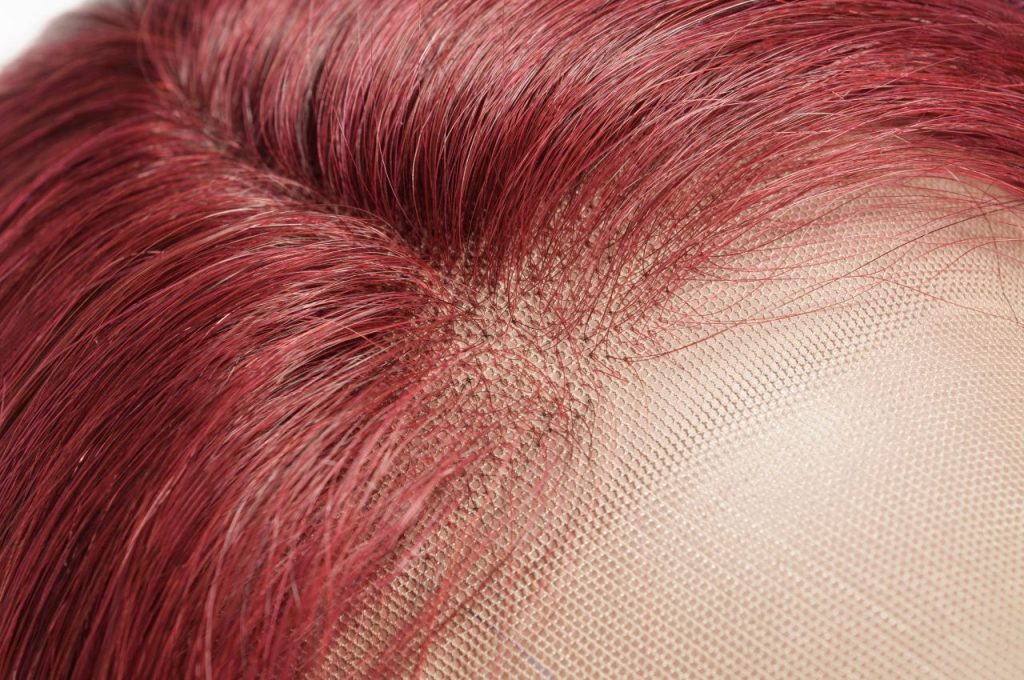
A lace front wig is your best chance for a natural-looking hairline, but again, this needs to be blended to match your skin tone. Colour matching your lace, and preparing your skin for its application with cleansing, exfoliation and priming is a great start. You can also use makeup to blend your hairline to perfection as this advice details:
“Opt for a foundation and concealer that perfectly match your skin tone. It’s often helpful to have two shades of foundation: one that matches your skin and one that is slightly lighter to highlight the hairline. Choose a full-coverage foundation for the most seamless blend, but ensure it’s buildable to avoid a cakey appearance. Concealer can be used to further refine the blend and cover any remaining knots.”
How your wig fits isn’t just about comfort, it can also create realism. Bulky wig caps, visible lumps and bumps, and lifting at the front or sides are other giveaways. Yet, these issues can be easily solved with proper fitting.
As well as using our wig size guide to achieve a great fit every time you shop, all our wigs come equipped with adjustable straps to make a snug (not tight) finish and more fluid, natural movement realities for each and every one of our customers.
While a voluminous look can point to healthy-looking hair, too much bulk can be bad news for the realism of a wig. Avoid fuller, high density wigs that are too thick overall. Instead of styles with uniform thickness, opt for a low or medium density wig that offers gradual thickness in all the right places to mimic the varying density of real hair.
The uniform look should also be avoided when it comes to the cut of your wig. Single-length, blocky cuts mean one thing – a fake look – and offer minimal movement to make your wig look even less natural. Wigs with layers and texture work wonders, and frame the face in the most flattering and stylish way.
If you look closely at anyone’s natural hair, you’ll find such a startling variation of colours. These hues are down to our genetics, with hundreds of genes influencing the colour of our hair. While we can’t generally replicate this exact combination of colours in your wig, avoiding a one-dimensional finish can help keep things looking natural.
Many wigs are available with slight variation throughout to prevent a fake, ‘helmet-like’ appearance. Multi-tonal shades can be celebrated through highlights, lowlights and balayage styles too.
If your wig has too much shine, chances are you’ll be hit with the fake label once again! Thankfully, there are many ways to remedy a super shiny wig. This includes using a wig-safe dry shampoo, combing your wig through with a dryer sheet, or removing shine over time with regular washing. You can find more tips for reducing unnatural shine here.
Shop our human hair and synthetic wigs to find a natural looking style you love today.
