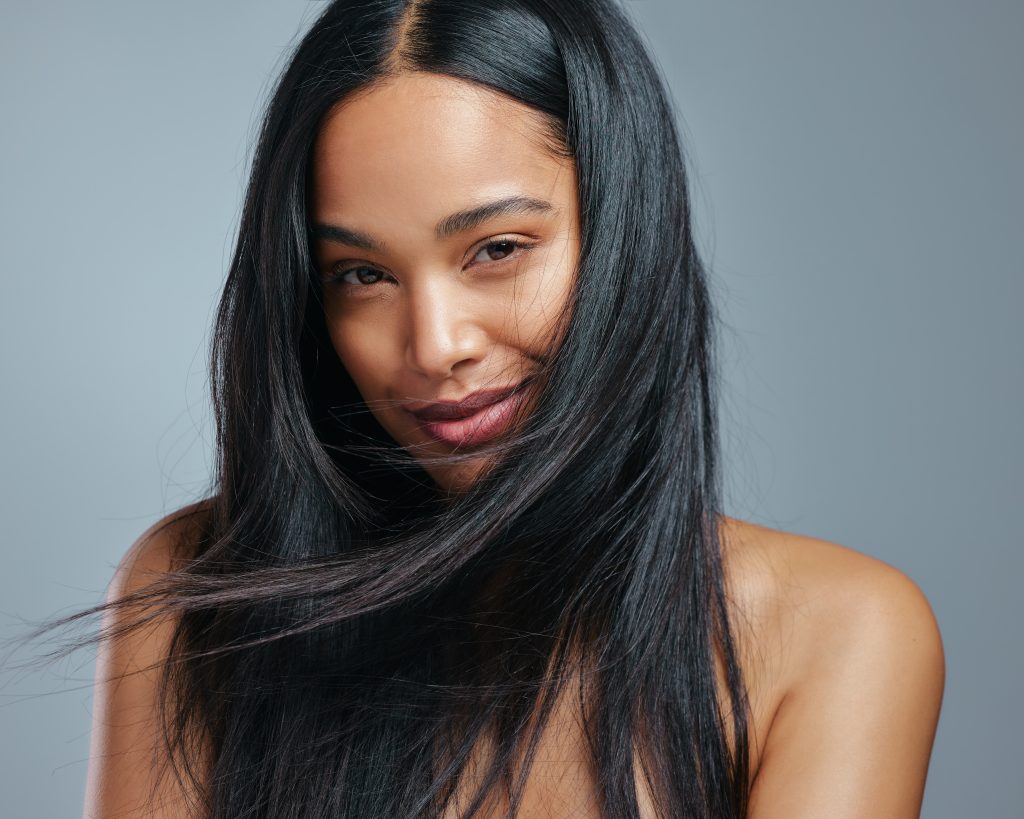
Wig comfort depends on the right fit, but there’s so much more a well-fitting wig can do for you. When a wig fits properly, you know it, with a wig that sits securely without slipping, pinching or creating tension essential to natural hair and scalp health.
A snug, balanced fit also prevents friction that can cause breakage and irritation around the hairline and on the scalp, while ensuring a natural finish that moves effortlessly with you. Beyond comfort and scalp health, a well-fitting wig plays a major role in how you feel about yourself. In fact, it’s pretty empowering to be rocking a wig that fits and looks fabulous!
Choosing the correct wig size isn’t easy, with a long, long list of measurements needing to be taken and many more factors to consider to ensure the perfect fit. Read on for a step-by-step guide to selecting a wig that’s just right…
If you have natural hair remaining, you’ll need to prepare to take the most accurate measurements. Try to create as smooth a surface as possible, sleeking back your hair with product or wearing a wig liner for the best results.
You can’t select the right wig size without collecting accurate measurements first. You’ll need a soft tape measure and a mirror to complete this task.
Measurements should be taken all the way around your head (this is the circumference), from the front hairline to the nape of the neck, ear-to-ear across the forehead, ear-to-ear over the crown, temple-to-temple, and across the nape.
Double check the measurements before using our guide to find the most appropriate size. We currently stock ultra-petite, petite, semi-petite, average, average-large and large wig sizes. Don’t worry if your measurements don’t match the specified sizes completely. All our wigs are equipped with Velcro adjusters to ensure these standard sizes can be adapted to your exact measurements.
If you fall between two wig sizes, it’s always best to opt for the larger size and adjust it to fit rather than squeeze on a tighter style.
Tight wigs are extremely uncomfortable to wear, and can cause headaches, scalp discomfort, redness along the hairline and an uneven finish. The added tension can also worsen hair loss as Indiana University School of Medicine’s Department of Dermatology explains:
“Traction alopecia is a mechanical form of hair loss—it happens due to constant stress or pulling on the scalp. People who wear wigs attached to tight braids, or styles that require frequent re-tightening, are more at risk. Over time, this repeated tension can damage hair follicles and cause scarring.”
A comfortable fit goes beyond the right wig size. You’ll need a wig that fits and feels good to enjoy optimum comfort, especially if you intend to wear your wig every day. Different wig cap designs fit and feel different, so do your research before settling on the right construction for your needs. Wig liners can also be added to the mix to boost comfort, reduce irritation and enhance security.
Ready to find the wig of your dreams? Explore our ladies’ wigs and men’s wigs today for all the inspiration you need.
 Fast Dispatch, everytime you place your order before 1pm (Monday–Friday) and we’ll aim to process and dispatch it the same day via Royal Mail Signed-For service. Please note: Weekend orders and those with out-of-stock items may take a little longer If there’s a stock issue, we’ll get in touch right away—just make sure your contact details are up to date!
  Thanks for choosing Wigs4U—we’re here to make wig shopping simple, fast, and fabulous!