When remedying or reducing the onset of hair loss, taking the non-surgical route is what we always champion. Hair transplant surgery is after all highly invasive, with the risk of scarring, cysts, prolonged itching, swelling, bruising, bleeding, and long-term pain and numbness all too real. By exploring the many non-surgical hair loss treatments available, you can minimise risk and maximise the rewards, and you have more options than you think…
From dietary changes, hair growth oils, and hair growth shampoos and conditioners to medication, natural DHT blockers and pioneering Hydrafacials, the possibilities are endless. There is one therapy that has really got hair loss sufferers excited though – platelet-rich plasma (PRP). In this blog post, we take a closer look at this non-surgical treatment and whether it actually works.
Platelet-rich plasma therapy is no new thing. It was introduced almost 20 years ago, with its use as a therapeutic tool snowballing ever since.
PRP therapy is primarily used to treat orthopaedic conditions, including lateral epicondylitis (tennis elbow), medial epicondylitis (golfer’s elbow), knee osteoarthritis, and impingement syndrome of the shoulder. Before we look at its uses as a non-surgical hair loss treatment, we first have to understand how PRP therapy works. Thankfully, WebMD offers a succinct explanation:
“To make PRP, your doctor takes some of your blood, spins it to separate the platelets from the other cells, and then puts the platelets back into the liquid part of your blood (the plasma). Why does that matter? Because platelets have hundreds of specialized proteins called growth factors that aid healing. Since PRP is concentrated with many more platelets than normal blood, it’s often used to treat wounds, tendon tears, and arthritis pain.”
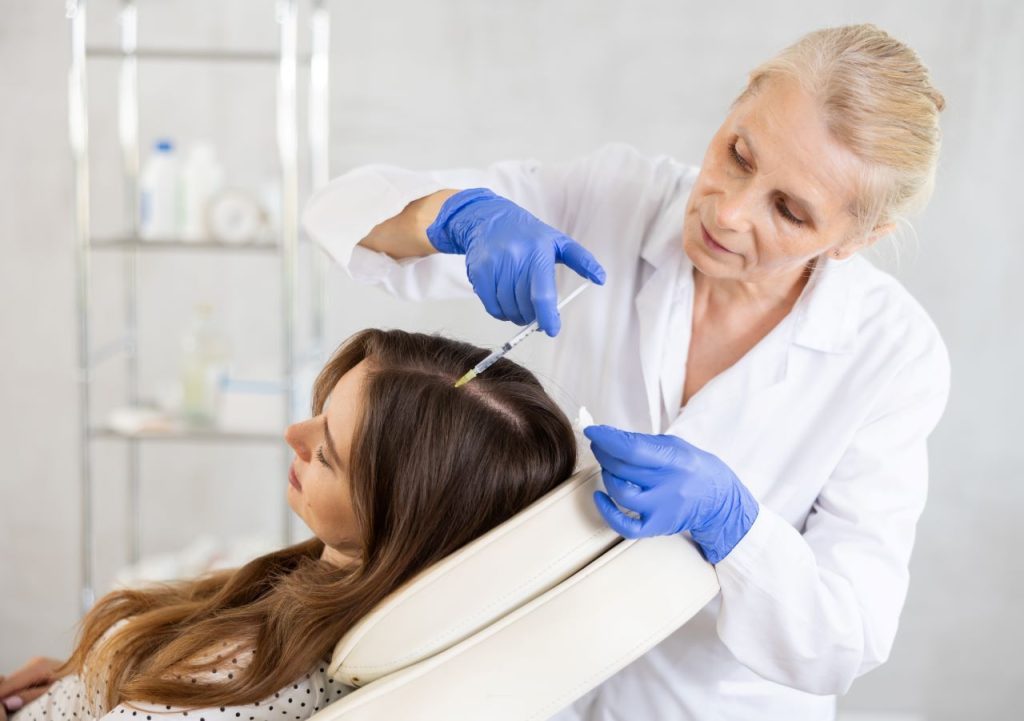
Increasingly plasma-rich platelet therapy is being used to combat hair loss and thinning. Platelets are injected directly into the scalp to help create or stimulate follicles within. The patient’s own blood platelets are used for the procedure, and are easily gathered during a simple blood test. Just a small amount of blood can provide enough platelets for PRP therapy.
The therapy relies on the body’s ability to heal and repair itself, with the concentrated formulation of platelets designed to give the patient a quick boost in a targeted area.
Platelet-rich plasma (PRP) therapy may be a popular regenerative treatment for hair loss and thinning, but its effectiveness varies widely from individual to individual, with results certainly not guaranteed.
Studies have shown that PRP therapy may indeed improve hair density and thickness, particularly in people with androgenic alopecia (male or female pattern baldness), with visible improvements realised over the course of a few months. Factors such as age, severity of hair loss, overall health and individual response play significant roles in outcomes however. This means that while some people experience significant improvements, others may see minimal or no results at all.
It is important to note that PRP therapy requires multiple sessions to boost the likelihood of good results. Ongoing maintenance is also required even in successful cases, making it a costly and time-consuming commitment. As with many hair loss treatments, PRP therapy needs more extensive research to fully understand its uses and success stories.
Whether you select PRP therapy, medication, natural remedies or a mixture of all, our wigs and hairpieces will provide a vital confidence boost and exceptional comfort during this challenging time. Shop with us today to find your perfect match.
