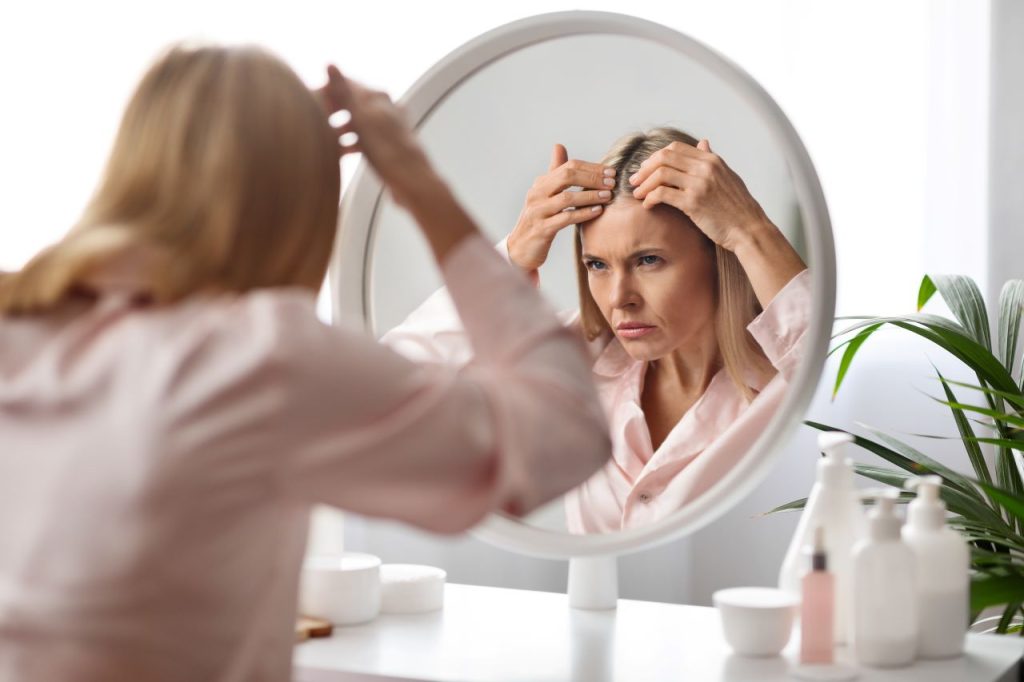
Our hormones fluctuate at various stages during our lifetimes. For men and women, those teenage years are particularly eventful, while pregnancy hormones can wreak havoc on an expectant or new mother’s physical, mental and emotional health. Hormonal changes also hit us hard during midlife, with menopause and andropause (AKA the ‘male menopause’) taking their toll.
As natural parts of the ageing process, both the menopause and andropause can’t be avoided. But, with the right treatment and preventative tips, many of their symptoms can! Midlife hair loss is one such symptom, here’s how to take midlife loss and thinning in your stride, and look and feel better than ever!
The causes of midlife hair loss vary dramatically, with genetics and ageing being the most common for female pattern baldness. The hormonal imbalances that go hand-in-hand with the menopause can also trigger thinning and hair loss in some.
In men, pattern baldness is linked to hormonal changes too, with male sex hormones (androgens) to blame in most cases. Healthline explains more about the role of androgens in midlife hair loss:
“Sex hormones in the body are believed to be the most significant underlying factor behind male pattern hair loss. Dihydrotestosterone (DHT) is an androgen. An androgen is a sex hormone that contributes to the development of what are thought of as sex characteristics for people with a penis, such as body hair. But it can also make you lose your hair faster and earlier.”
Whether your midlife hair loss is related to ageing, linked to your family history, or the result of hormonal changes, you can define its cause and the most suitable course of treatment with assistance from a medical professional.
Midlife hair loss, and its underlying cause, can be diagnosed in several ways. This includes via a full blood count (FBC), thyroid function tests, autoimmune condition investigation, hormone test, or dietary assessment.
While your exact treatment options will come down to the underlying cause, it is important to note that midlife hair loss caused by the menopause is not permanent. In fact, in many instances, people find the best results through lifestyle changes, with what you eat, how often you exercise and how you manage stress key areas of interest.
Topical treatments, available on prescription or over-the-counter, also offer improvements. Minoxidil can be administered orally or topically to treat midlife hair loss in men and women. Other treatment options for midlife hair loss include hormone medications, platelet-rich plasma (PRP) therapy, and laser treatment.
As the saying goes “prevention is better than cure”, so take steps to prevent midlife hair loss as early as possible. When it comes to your hair care routine, the gentler approach is always better. Use skin friendly, sulfate-free shampoos and conditioners, and avoid hot oil treatments and heat styling.
Eating well also helps, with the Mediterranean diet one of the best for preventing hair loss thanks to its high concentration of raw vegetables, fresh herbs, lean proteins and antioxidants.
Concealing thinning or early stage hair loss with a wig is another great option for those seeking treatment or taking preventative measures. Thankfully, you don’t have to search too far to find a high quality wig or hairpiece for your midlife hair loss!
Shop our women’s wigs and men’s wigs today to find your perfect match.
